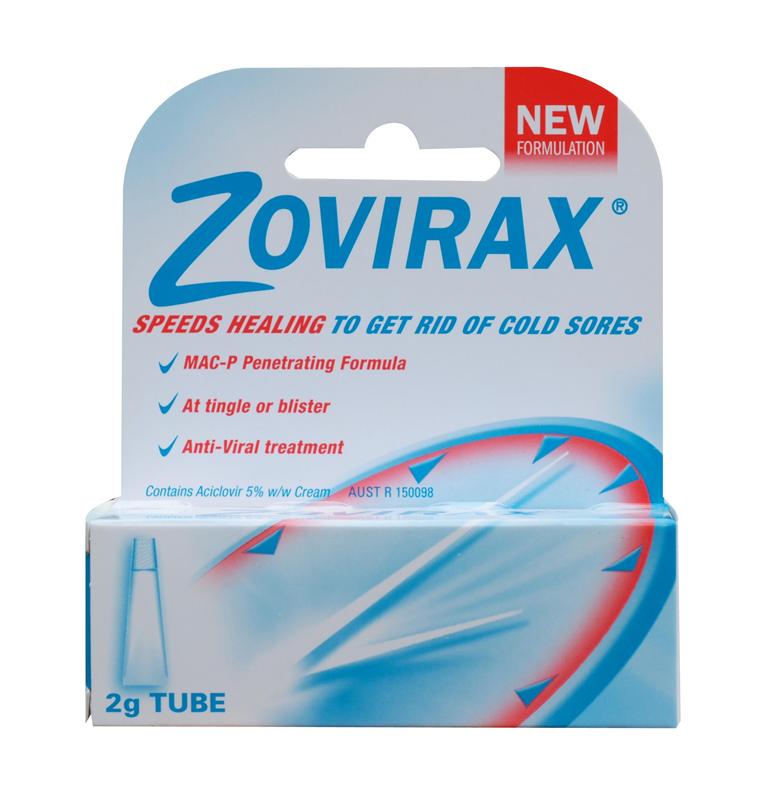
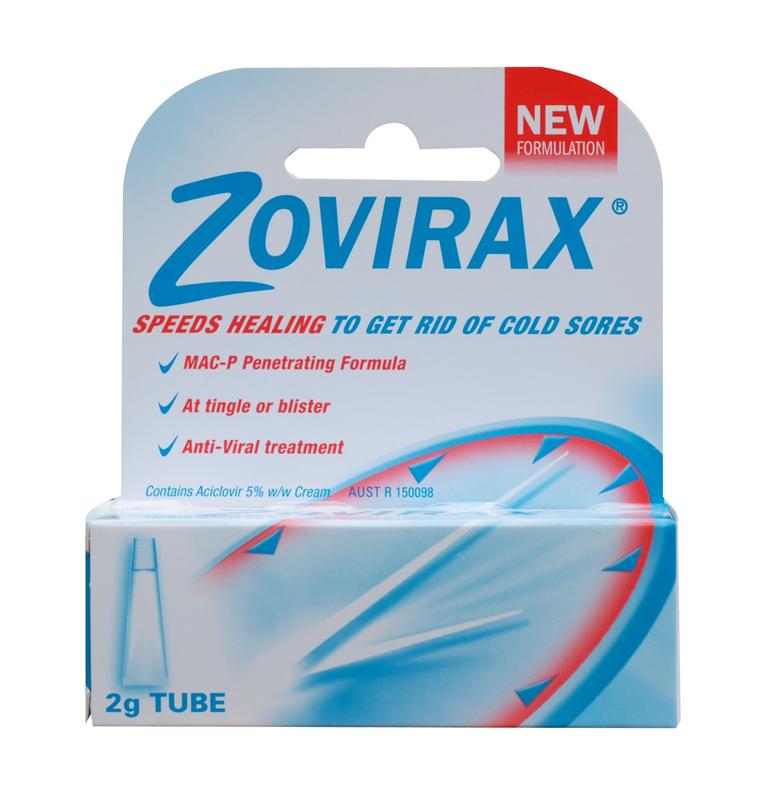
FEATURES AND BENEFITS
- Effective antiviral treatment for cold sores.
- Treats and speeds healing.
Zovirax Cold Sore Cream is an effective treatment for cold sores. It contains the antiviral agent, aciclovir, in a special patented MAC-P Penetrating Formula.
The active ingredient aciclovir itself is poorly absorbed. The aciclovir in Zovirax Cold Sore Cream with the help of MAC-P is able to enter the cells that are infected with the cold sore virus and stops the virus multiplication to speed healing and get rid of cold sores fast.
There are 4 stages of a cold sore. You can use scientifically proven Zovirax Cold Sore Cream at any stage to speed healing and get rid of your cold sore fast.
-
Tingle Stage
Your skin tingles and itches and you know a cold sore is on its way. Treat this symptom with Zovirax Cold Sore Cream and you could stop the cold sore appearing. Remember, if you are prone to cold sores and you sense the tingle, the cold sore is at the early stages. This stage may not last 24 hours so it is important to use Zovirax Cold Sore Cream right away.
-
Blister Stage
A small, raised blotch swells and forms a painful single blister or cluster of blisters. When the blister first breaks through the skin, healing can take several days. Apply Zovirax Cold Sore Cream at this stage and it helps to speed up the healing by days. Carry on using if your cold sore does develop.
-
Weeping Stage
Now the blisters collapse and join up to form a large, weeping sore. The virus can spread very easily at this stage.
-
Scab Stage
The blisters begin to dry out and heal. A scab begins to form. If picked at, the scab may crack painfully and bleed.
This is a pharmacy only medicine. Always read the label and use only as directed. If symptoms persist, talk to a healthcare professional. We reserve the right to not supply this medicine.
Ingredients
Active ingredient
Aciclovir 5% w/w
Directions
- Wash your hands before and after treating the cold sore so as to avoid making it worse or giving the infection to someone else.
- At first sign of tingle or blister apply a small amount to the affected area 5 times daily for 4 days.
- If you forget a treatment, apply some as soon as your remember, then continue as before.
- If your cold sore has not healed after 4 days of treatment or your cold sores become very severe, consult your doctor.
Ideally, you should start using Zovirax as soon as you feel the tingle of a cold sore. However, if you miss this, you can still use Zovirax at any stage during the cold sore to speed healing.
If you are prone to getting cold sores, you might find a good multivitamin such as Thompsons Immunofort and Lysine helpful to prevent as well as to speed up the healing of cold sores.
Warning
Always read the label carefully and use strictly as directed. If symptoms persist or side effects develop, see your healthcare professional.
Do not use Zovirax:
- If you are pregnant.
- If you are breatfeeding.
Pharmacy Only
Medicines have benefits and some have risks.
Always read the label and use only as directed. If symptoms persist or you have side effects see your healthcare professional.